
3 Simple Ways to Design More Human Experiences

Hidden Treasures
A Quiet Beginning
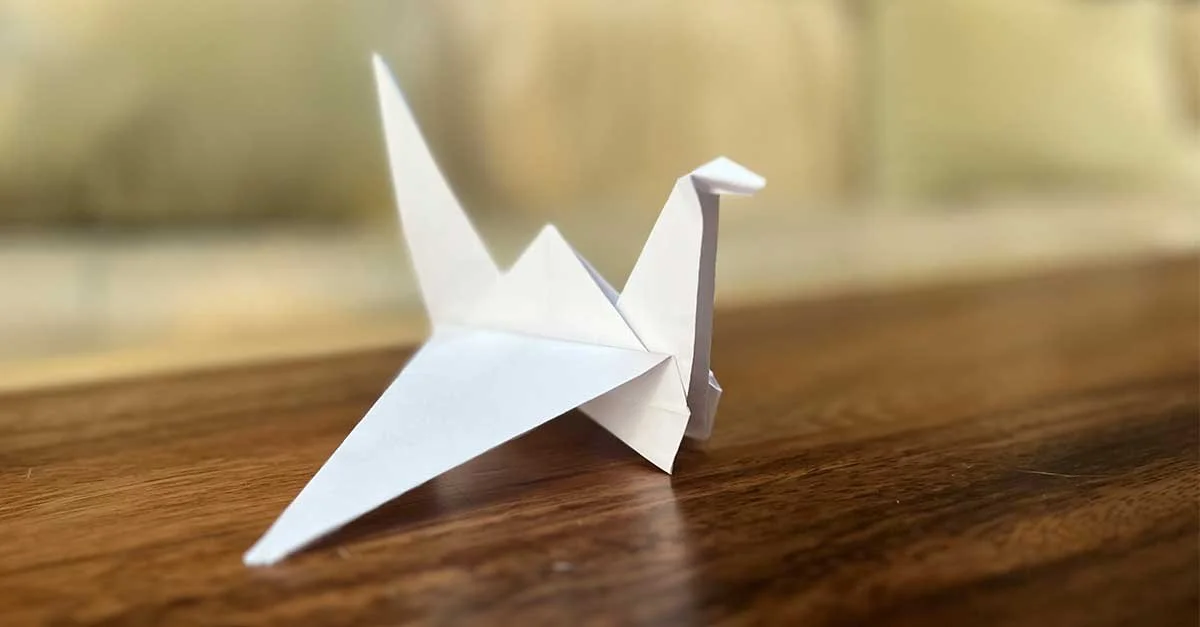
We traveled over the Christmas holidays to spend time with extended family. As we gathered in the kitchen of my childhood home, my son sat quietly at the table folding an origami swan.
He’s been making them for a while. Someone once taught him how, and it stuck. It’s clever. Precise. Familiar.
But this time was different.
He was up to something.
Helping That Reduces Friction
BABY STEPS
Before this moment, our family had been part of a ministry at our church called Second Hands. At its core, the ministry solves a simple but meaningful problem: it connects older adults in our community that have a need with someone willing to help.
It’s a powerful baby step into service because it’s not about having a particular skill.
It’s about being willing.
The emotional friction seniors were experiencing:
Needing help but not knowing how to ask
Feeling frustrated by lost independence
Lacking digital confidence or feeling intimidated by technology
Not knowing where to turn for someone trustworthy
Not wanting to feel like a burden
Sometimes the task is digital—finding photos that “disappeared,” tracking down missing emails, connecting a printer, or reconnecting to a livestreamed church service when attending in person is no longer possible.
Sometimes it’s physical—changing a light bulb, moving furniture, or putting decorations away.
In every case, the goal is the same: help in a way that feels supportive and empowering.
For my son, what I love most is how naturally this ministry uses his gifts—especially his comfort with technology in an area of growing importance: digital literacy for older adults.
He sits with the person who need help.
He listens.
He teaches slowly and clearly.
He empowers instead of taking over.
The goal isn’t dependency.
It’s confidence—with the added gift of trust and community.
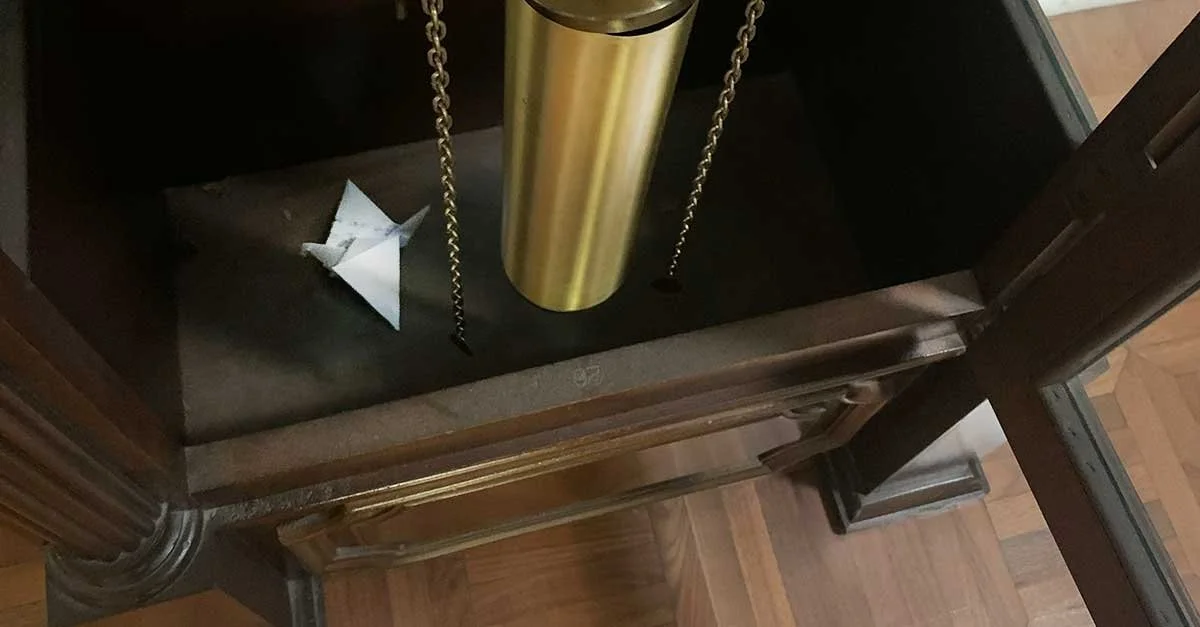
An Origami Swan and a Grandfather Clock
A Small Action, Designed with Intention
BE A STUDENT
When we choose to be a student of someone, we take the time to really know them. We pay attention.
That afternoon at my mother’s kitchen table, as my son folded swans, I noticed something new.
Inside each one, he was writing a small note.
Then he taught me how to make them too.
Together, we hid the swans around my childhood home—inside cabinets she opens regularly, resting on shelves she passes, tucked into the base of a grandfather clock.
Not places she’d find immediately.
Places she would encounter naturally, later.
This mattered.
Because my son was a student of my mother’s world. He understood her rhythms, her routines, and how to add joy after we left. It was not about him. It was about her.
Designing Moments That Continue
A few days after we returned home, my mom called—delighted.
“I found a swan! This is so much fun. I love you all dearly.”
The next day, she found another.
The joy didn’t peak while we were there.
It unfolded afterward.
That’s when it became clear: this wasn’t about origami.
It was about an intentional experience.
Someone anticipated her rhythms.
Someone noticed what would matter to her later.
Someone designed for touchpoints beyond the visit.
Quiet Design Is Powerful Design
IT’S NOT ABOUT YOU
The best experiences don’t announce themselves.
They meet you quietly.
Right where you are.
A swan in a familiar cabinet.
A note discovered days later.
Connecting a livestream. Replacing a light bulb.
Good design doesn’t shout.
It listens.
When we design with care, people don’t just understand the experience.
They feel supported.
They feel capable.
They feel seen.
Three Human-Centered Takeaways (for Humans)
Study the real life of the user.
Great design starts by understanding how someone actually lives—their routines, limitations, energy, and context. Be a student of your user.Design for dignity.
What matters most is rarely speed or polish. It’s confidence, trust, and feeling capable without feeling like a burden. It’s not about you.Extend care beyond the moment.
The most meaningful experiences don’t end when the interaction does. They linger—through memory, surprise, and thoughtful follow-through.
These aren’t just design principles.
They’re ways of showing up. Even a baby step is the step in the right direction.
Let’s Design with Care
Every experience tells a story—from the first interaction to the moments that linger long after.
At Swayze Design Studio, I help businesses design more human experiences by:
Understanding real customer journeys
Noticing what matters most to users
Designing thoughtful touchpoints that extend beyond a single interaction
If your digital experience doesn’t reflect how your customers actually live, let’s change that.
Let’s design moments people discover with joy.
You Might Also Like
Meeting People Where They Are- Not Where You Are
When we’re tired, stressed, or overwhelmed, clarity isn’t a luxury, it’s essential. In this post, I share a travel moment that became a powerful reminder of why good design starts with empathy. When we design for real human moments, not ideal ones, we create experiences that truly work. Read on to explore what it means to meet people where they are.